
I stopped writing quotes and started drawing them. Not because prose is beneath me, but because I kept losing hours to it and, worse, watching good projects stall on a document nobody enjoyed reading. Over the years I tried nearly every format: the long proposal with its terms and mission statement, the plain-text email, the spreadsheet, the polished slide deck. I kept a quiet score of which ones actually got signed. One format wins by a distance, and it is the simplest.
Nobody reads the ten-page proposal
Here is the uncomfortable truth about the big multi-page quote: it is mostly theatre. Pages of scope, boilerplate and carefully-worded assumptions, and buried somewhere in the middle, the two things the client actually wants: what will happen, and what it costs. They should not have to hunt for them. When a proposal demands twenty minutes of reading before the shape of the deal appears, you have added friction at the exact moment you needed momentum.
It is expensive to make, too. Every one of those pages is time spent looking professional instead of being clear. Multiply that across every request that starts from a blank page and you have a slow, joyless tax on winning work.
A quote's job is not to be read. It's to be understood in one glance.
The one-page plan
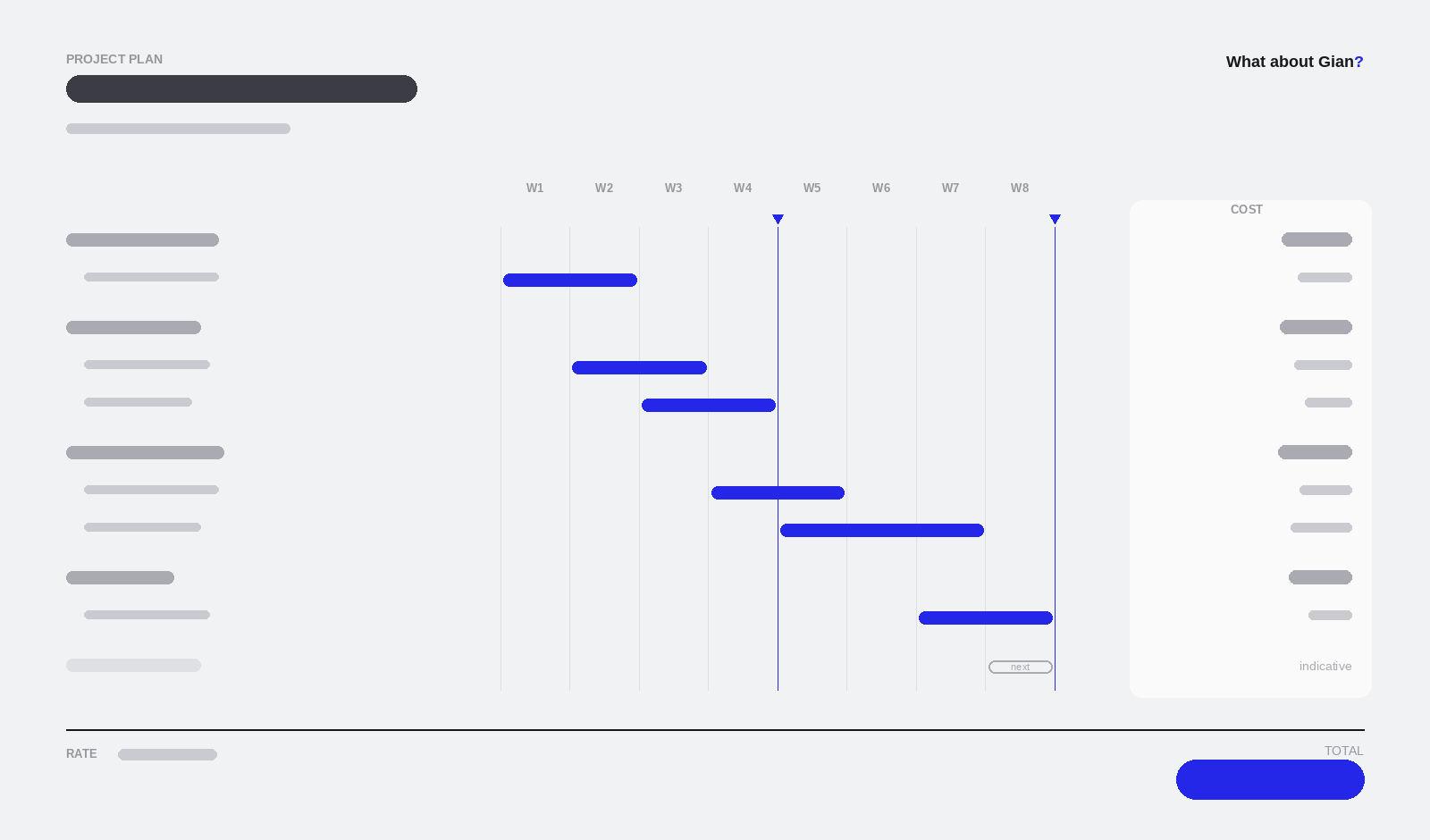
What earns the fastest yes, consistently, is a single landscape page you take in at a blink. A weekly timeline with simple bars, so the client sees when things happen and how the work sequences. Tasks grouped into phases, each with a short deliverable line and a duration. Clean per-line pricing, phase subtotals, and one big total that never hides. Milestones marked along the timeline, "print handoff", "launch ready", so progress feels real. Future phases shown as lighter, clearly-labelled "indicative, not in this total" rows, so the client sees where it could go without feeling committed. The rate and the payment logic sit right there on the page.
The design is doing real work here, not decoration. A warm off-white bled edge to edge, one strong accent colour, a clean sans, generous spacing, and nothing shouting for attention. It reads as calm and premium. The client stops looking for the number and starts seeing the whole shape of the project at once. That shift, from hunting to seeing, is the entire game.
The version that matters is the second one
First quotes are the easy part. Real client work lives in the back-and-forth: drop the webshop, go deeper on brand, simplify to one product, can we phase it. This is where the long proposal falls apart, because every edit risks a patched-together, inconsistent mess. A one-page plan built from a repeatable system regenerates in minutes and stays clean every time. The document absorbs the changes instead of showing the scars. Being fast and tidy on version four is worth far more than being beautiful on version one.
What I actually learned
Show the whole shape at once, because people decide faster when they can see it rather than read it. Price the client, not just the scope: read budget and sophistication on the call, then right-size, lean and friendly for one, premium and thorough for another. Make the first step easy, because a small, low-risk first project buys the trust the bigger work rides on. Be honest about scope, parking future phases as clearly indicative rather than hiding them, since a number only feels trustworthy when nothing is buried under it. And treat consistency as a feature: a repeatable house style means every quote looks considered, and every update takes minutes, not hours.
The quiet payoff is not really about quotes at all. It is that I spend less time making things look professional and more time on the actual work, and the client understands the offer instantly. The design did the closing, so I did not have to.
the takeaway
Stop writing your quotes and start drawing them. Put the timeline, the phases and the pricing on one calm page a client can grasp at a glance. It is faster to produce, painless to revise, and it gets signed more often, because a plan you can see beats a proposal you have to decode.